
 A:攻击
A:攻击 B:跳跃(空中可8方向移动)AB:特殊技
 6A:重击
6A:重击
摇杆一圈_+A:双向攻击
合作技:任意两玩家站在一起不动1秒会自动发动
MARGE/HOMER:爱情风火轮,连打攻击键可增加伤害
MARGE/BART:举起BART投掷出去
MARGE/LISA:举起LISA投掷出去
HOMER/BART:举起BART,协同攻击
HOMER/LISA:举起LISA,协同攻击
BART/LISA:疯狂熊孩子,移动带攻击判定
连打攻击键可增加伤害
顶蘑菇 启动!
街机 · CPS1
支持 EmulatorJS 云端核心、键位方案、本地 ROM 与浏览器存档。
查看游戏资料、发行信息与玩法介绍。
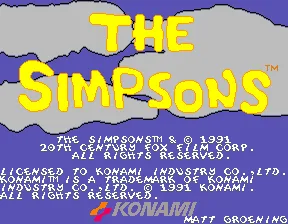
《Simpsons》的相关改编游戏不可谓不多,但却没有一款知名的,连稍有名气的都没有。这与Simpson的大牌地位实在太不相称,老实说,它也许是最不成功的名剧改编原型。但至少有一个例外能打破这一残酷的定律,它就是Konami的街机清版游戏《The Simpsons 》。
辛普森家族 1991 Konami
《Simpsons》的相关改编游戏不可谓不多,但却没有一款知名的,连稍有名气的都没有。这与Simpson的大牌地位实在太不相称,老实说,它也许是最不成功的名剧改编原型。但至少有一个例外能打破这一残酷的定律,它就是Konami的街机清版游戏《The Simpsons 》。
在大红大紫的《忍者神龟》推出两年后,Konami打算重新复制街机厅的辉煌,这一次,他们的改编对象是家喻户晓的美剧《The Simpsons》。这也是Konami利用忍者神龟引擎,换汤不换药,大批泡制清版动作游戏的开端。
《The Simpsons》的故事非常简单,游戏一开始,一家人外出散步,路上偶遇刚刚抢劫了珠宝的Smithers,Smithers与Homer与撞了个满怀,盗来的宝石被撞飞,刚好被一岁的小女儿Maggie拣到,眼看要从一个婴孩手中夺回宝石很困难,Smithers干脆绑架了她。Homer赶忙报警,但无能的警长Wiggums根本就束手无策,Homer只好率领自己的家人独自去救回小女儿。他们的旅程要穿越整个Springfield市,最后与盔甲厚实的Mr.Burns先生展开最后的决定,他的盔甲很像Wolfenstein 3-D中的希特勒。也许id的家伙们也爱玩这款游戏吧!
剧情简单,游戏方式更加基本,你可以攻击和跳跃,或者两键同按发动强力攻击。你的攻击配有很多动画效果,但是你无法选择,它们其实也都是一回事。你可以找到的武器很酷,但很难熟练掌握。你要做的一切就是将武器举过头顶,然后朝可怜的敌人猛掷。其中一些比较有趣的武器包括可乐罐,保龄球,岩石,桌球,道路施工标示锥,甚至还有一个小浣熊。唯一的问题是它们只能被掷一次。和忍者神龟类似,你也可以打飞路上的各种标识路障,借助它们的冲力击倒敌人。你的角色甚至还能装备弹弓、扫帚、棒槌等更加有效的武器。话说回来,游戏中的战斗虽然很基础,但依然很好玩,特别是它的多人联合作战部分很好地弥补了一切缺憾:当任何两名角色在同一个地点站立不动大约一秒钟,便可进入联合攻击状态模式。两位合体后的角色拥有完全不同于个人招式的攻击方式,而且双方都对两位角色拥有完全的控制权,这也许会引起一点混乱,却强调了团队合作的重要性。最出色的,每种可能的角色组合都有着完全不同的攻击方式和动画效果。这实在是一个绝妙的创意,自然也是游戏最大的卖点。单凭这一点,就让《The Simpsons》一下子脱颖而出!没有其它任何一款清版动作游戏,能想到这样绝妙的团队合作创意,如果你没有和其他人联手玩过这部游戏,是体会不到这一点的。
本作出色地重现了同名动画片的原有风貌,游戏画面看上去简直就和动画片一模一样,连开场画面都以动画片的著名主题曲为基础,游戏还包罗了从Milhouse、Barney、Otto、Sherri,到Marvin Monroe、Sideshow Bob等几乎每一季中的配角。甚至连连环画《Life in Hell》中的兔子都偶有登场。游戏中还随处透射出奇特的幽默感:在Marge在触电,或者头发被真空吸尘器弄乱时,你能够看到掩藏在她头发下的巨大耳朵,活像Life in Hell中的兔子。
本作的日版与美版稍有区别。日版的难度设定更低,补血道具000更多,获得的分数更高,在一关结束后,会根据你剩余的血量奖励相应的额外分数。最后日版中的主角可以在装备近战武器的情况下跳跃,这在美版中是不可能的。
《The Simpsons》没有被任何家用主机移植(这大概是因为Simpsons的家用机移植权掌握在Acclaim手中所致),倒是移植到了PC上。鉴于MS-DOS上的大部分街机(包括家用游戏)移植作都是垃圾,本作在PC上的出现表现还是很令人意外的。虽然画面并不完美,但也还算差强人意,连过场画面也原样复制。动作很流畅(但连击判定很严),敌人更少,特殊技似乎没有了。大部分音效也不见了,不过AdLib制式的音乐也不算太坏。可惜只能两个人同玩。C64版则有着很漂亮的过场画面和很不错的SID音乐,但节奏很慢,很生硬。
A 27-year-old Arcade Video Game PCB
The Simpsons (c) 1991 Konami.
A jewel heist gone wrong sees Mr Burns's sidekick, Smithers, kidnapping Maggie and making his escape. Between one and four players take on the role of either Homer, Marge, Lisa, or Bart in this colorful, horizontally-scrolling beat-em-up from Konami. Each Simpsons character possesses an attacking move specific to them; Marge is armed with a vacuum cleaner, Lisa has a skipping rope, Bart has his skateboard, and Homer fights with his fists. The players must battle their way through a variety of Simpsons-themed levels - such as Springfield and Krustyland - fighting goons, thugs, zombies, drunks, firemen, and several Simpsons regulars. Many Simpsons characters that don't appear as enemies have 'cameo' scenes in the game (Otto working at a burgerstand in Krustyland, for example). The archetypal 'boss' character awaits the players at the end of every stage. The game ends with a final showdown with the evil Mr. Burns in his luxurious mansion.
The Simpsons was designed to Konami's typically-high production standards and was, like the 'Ninja Turtles' games that appeared a couple of years' earlier, very faithful to its source material. The colorful, smoothly-animated sprites captured the spirit of the legendary cartoon superbly, and the game's many humorous touches were timed to perfection.
- TECHNICAL -
There were several distinct versions of this game available in the arcade, the 4-player dedicated cabinet, the 4-player conversion kit (designed to retrofit "Teenage Mutant Ninja Turtles", but a lot of them ended up on "Gauntlet" machines too), and the 2-player conversion kit (designed to retrofit almost anything). The only real difference in game-play between versions was the maximum amount of players. The Simpsons dedicated cabinet was fairly large and had an over-sized control panel (to accommodate 4 players). The sides were decorated with painted side-art showing all five members of the Simpsons family scampering around (Homer seems to be stepping on the tail of the family cat). Some cabinets may have this same scene as a large sticker, instead of it being painted on. American machines are usually blue in color, while the European ones were usually white. The marquee shows a family photo and has a 'The Simpsons' logo done in yellow. The control panel repeats the graphics from the marquee and has 4 joysticks (one for each player), each of which is a different color. Different Simpsons machines will have different sized monitors, although 25" and 32" were the most popular sizes available.
Game ID : GX072
Main CPU : KONAMI (@ 3 Mhz) Sound CPU : Zilog Z80 (@ 3.579545 Mhz) Sound Chips : Yamaha YM2151 (@ 3.579545 Mhz), K053260 (@ 4 Mhz)
Players : 4 Control : 8-Way Joystick Buttons : 2 = > Attack, Jump
- TRIVIA -
The Simpsons was released in April 1991.
This video game is based on the prime-time animated series of the same name created by Matt Groening.
The Simpsons and "Aliens" arcade machines can be seen in the background of the 'Moe's Tavern Stage'. Ever wonder why the Aliens arcade game makes a cameo appearance in The Simpsons? It turns out that both The Simpsons tv show and Aliens (the movie) are made by 20th Century Fox (and of course, Konami got the rights to make the arcade games for both franchises).
Some stuff related to the TV series : * In the character profiles, Lisa is said to be age 7. In the TV series, she is 8 years old.
* In the Character profile, Homer's age is 35. His real age is 36. Konami goofed that one.
* Bart wears a blue shirt in this game. In the series, he normally wears an orange shirt. The blue-shirted Bart appeared on various T-shirts and other Simpsons merchandise. This was even referenced in one episode of the series. Homer was waving Lisa (who wears a red dress) around to attract a bull's attention. Then Homer says 'Now for some calming blue', and reaches for Bart. Seeing that Bart is wearing an orange shirt, he says 'Where's your blue shirt?'. Bart replies, 'I don't have a blue shirt'.
* In some parts of the game, the bow in Maggie's hair is pink. Other times, it is the correct blue color.
* The rabbit characters that appear in various places in the game are from Matt Groening's comic strip, 'Life in Hell'.
* Smithers is much more evil in this game than he has ever been in the show. In the series, Smithers is (as Burns himself put it) 'the sober Yin to [Burns'] raging Yang'. In this game he is depicted as a cape-wearing, bomb-throwing psycho. Smithers' voice is wrong - Smithers is colored wrong. The color scheme used in this game appears to be based on the episode 'Homer's Oddysey', in which Smithers was colored incorrectly. In this episode, his skin color was also incorrect : instead being yellow, it was a dark pink color. Also, Smithers has never worn a cape, as he does in this game (Perhaps he has an evil twin who is a cape-wearing mad bomber!).
* Mr. Burns' voice also sounds wrong, except when he says 'Excellent'. The 'Excellent' voice sample was taken directly from the show and the rest of the lines were recorded by a different actor.
* SPOILER ALERT! : After Mr. Burns has been defeated, his eyes turn into Xs as he is lying on the ground. In the series Bart's eyes were drawn as Xs in a dream sequence, when Bart was imagining that school bully Nelson Muntz had beaten him to death and the school nurse had reconstructed his face for his funeral.
* In this game Sideshow Bob helps you by giving you food that restores your health. Since a first season episode where he framed Krusty the Klown for armed robbery and his plans were foiled by the Simpson kids, he is normally a villain. It seems that this game was made before the first season was finished (Or at least the people who worked on the game hadn't seen all of the episodes yet).
* The 'Moe's Tavern' stage in this game does not look much like it's TV counterpart. In this game it seems to be underground and only accessible by hidden elevators (One of the elevators is in a fake 'Krusty' grave in the cemetary stage, the other in a wall of rock in the 'Springfield Butte' stage). Of course, in the series it is just a regular building with a regular door that people walk through off the street.
* In this game, Barney's hair color is the same color as his skin (yellow). He appeared this way in a few early episodes of the first season, but later his hair was colored brown and only the Simpson kids have hair that is the same color as their skin.
* Channel 6 (Stage 7) : The anchorman in this stage is the same one that appears in the episode 'Call of the Simpsons'. In that episode, this anchorman sounds just like Kent Brockman, but looks completely different. The anchorman's hair was colored gray in the episode, but in this game the anchorman is colored like Scott Christian (Early on in the series, an anchor named Scott Christian would frequently be 'filling in for Kent Brockman', the regular anchorman. Eventually Christian was dropped from the series and they just used Kent Brockman). This anchorman is neither Kent Brockman or Scott Christian. If you stand in front of the anchorman, he will get mad. If you jump up on the anchor's desk, he will shrug his shoulders.
In Stage 7, in the scene where you fight ninjas, the sign reads 'kabuki'.
Michael Jackson used to own this game (4-Player model, serial number: 072251). It was sold at the official Michael Jackson Auction on April 24, 2009.
- UPDATES -
* In the Japanese version, there are nuclear bombs laying around that can be thrown at enemies (for example, in front of the Noiseland Arcade in the first level). These bombs are not present in the other versions. These bombs look the same as the ones Mr. Burns shoots at you on the last level.
* In the Japanese version, you can fill you life meter past full. For example, if your life meter is already full and you get an item that restores your health, you get no benefit in the non-Japanese versions. But in the Japanese version, you will get additional health points, indicated in the meter by a different color (When the life meter is full, it is purple. When it goes past full, the additional health is shown in yellow).
- STAFF -
Main programmer : A. Suzuki Software designers : Hirotaka_2, Nwk Graphic designer : Kengo Nakamura Main character designer : Y. Takano Character designers : K. Nakajima, Noriyuki Yokoki Sound & effect programmer : Hideaki Shikama Music by N. Hanzawa. Hardware designer : H. Matsuura Package designers : N. Satoh, K. Kamiya Special guest : Hiroshi Iuchi (H. Iuchi_4), M. Samejima Management : S. Kido Supervisor : Kengo Nakamura
- PORTS -
* CONSOLES: Microsoft XBOX 360 [XBLA] [US] [EU] [AU] [JP] (feb.3, 2012) Sony PlayStation 3 [PSN] [US] (feb.7, 2012) Sony PlayStation 3 [PSN] [EU] (feb.8, 2012)
* COMPUTERS: [US] Commodore C64 (1991) PC [MS-DOS] [US] (1991)
* OTHERS: BlackBerry [US] (dec.9, 2009) [Model 5046] Apple iPhone/iPod [US] (dec.21, 2009) [Model 344217468] Windows Mobile [US] (feb.1, 2010)
- CONTRIBUTE -
Edit this entry: https://www.arcade-history.com/?&page=detail&id=2445&o=2
 464 / 6 为后 / 前方向(随角色朝向理解)
 2
2 82 / 8 为下 / 上方向AB
 C为街机功能键,不等同于浏览器键位
A:攻击B:跳跃(空中可8方向移动)AB:特殊技6A:重击
摇杆一圈_+A:双向攻击
合作技:任意两玩家站在一起不动1秒会自动发动
MARGE/HOMER:爱情风火轮,连打攻击键可增加伤害
MARGE/BART:举起BART投掷出去
MARGE/LISA:举起LISA投掷出去
HOMER/BART:举起BART,协同攻击
HOMER/LISA:举起LISA,协同攻击
BART/LISA:疯狂熊孩子,移动带攻击判定
连打攻击键可增加伤害
日版的难度设定更低,补血道具更多,获得的分数更
高。在一关结束后,会根据你剩余的血量奖励相应的
额外分数。日版中的主角可以在装备近战武器的情况
下跳跃,这在美版中是不可能的。
日版吃补血道具时,如果补血量超过当前损血量,会
延长血槽。
日版中有独有的炸弹道具。